LGBTQ romance books are most powerful when they do more than place two attractive people in the same room and wait for sparks. Real emotional force comes from everything underneath the attraction: identity, loneliness, self-protection, desire, social performance, fear, humor, and the courage it takes to tell the truth about what someone wants.
That is why the best gay romance novels often feel less like “love stories” in the narrow sense and more like stories of exposure. A character does not simply fall for another person. He is forced to ask what kind of life he has been performing, what kind of intimacy he has avoided, and what it would mean to be known without editing himself for the room.
For readers in the United States, where conversations about sexuality, public identity, family expectation, and personal freedom are constantly evolving, LGBTQ fiction bookss carry a special kind of relevance. They are not only about representation. They are about recognition. They give readers characters who are funny, guarded, contradictory, ambitious, wounded, self-aware one minute and completely foolish the next. In other words, they give readers people.
What Makes Gay Romance Novels Emotionally Compelling
Gay romance novels become emotionally compelling when the attraction is not easy to explain away. Chemistry matters, but tension matters more. The reader should feel that something is at risk before anyone says the word love.
That risk may be rejection. It may be embarrassment. It may be the fear of being misread, reduced to a type, or desired only for appearance. Many LGBTQ characters understand the difference between being looked at and being seen. The first can be flattering. The second can be terrifying.
A strong romance scene does not need melodrama to work. Sometimes the most revealing moment is a pause, a bad joke, a defensive answer, or a character pretending not to care. When two people are attracted to each other but do not yet trust what the attraction means, every line of dialogue carries double weight. Are they flirting? Testing each other? Protecting themselves? Trying to escape before the conversation gets too honest?
This is where great LGBTQ romance books separate themselves from predictable formulas. They understand that vulnerability is not soft. Vulnerability can be combative, witty, awkward, arrogant, or disguised as indifference. A character may want love and still sabotage the moment because wanting anything too openly feels dangerous.
LGBTQ Fiction Books and the Search for Belonging
LGBTQ fiction books often work best when they explore belonging beyond romance. A person can be desired and still feel alone. A person can be visible and still feel misunderstood. A person can appear confident in public while privately wondering where he belongs.
That tension is especially powerful in stories set in image-driven spaces such as Los Angeles, New York, the art world, entertainment, fashion, media, or any social environment where people are constantly performing. In those worlds, identity becomes both personal truth and public currency. People learn how to present themselves before they learn how to be honest with themselves.
For LGBTQ characters, the question of belonging can become layered. Where do they fit within family history? Within queer community? Within professional ambition? Within friendships that are affectionate but shallow? Within rooms where everyone claims to be open-minded but still makes quick judgments?
The strongest fiction LGBTQ books do not treat labels as the whole story. Labels may matter, but no person is only a label. A gay man may also be a rancher, an artist, a failed actor, a caretaker, a cynic, a romantic, a son, a stranger in a new city, or someone who has survived more than he admits. The richer the character, the more meaningful the representation.
When Romance Becomes a Mirror
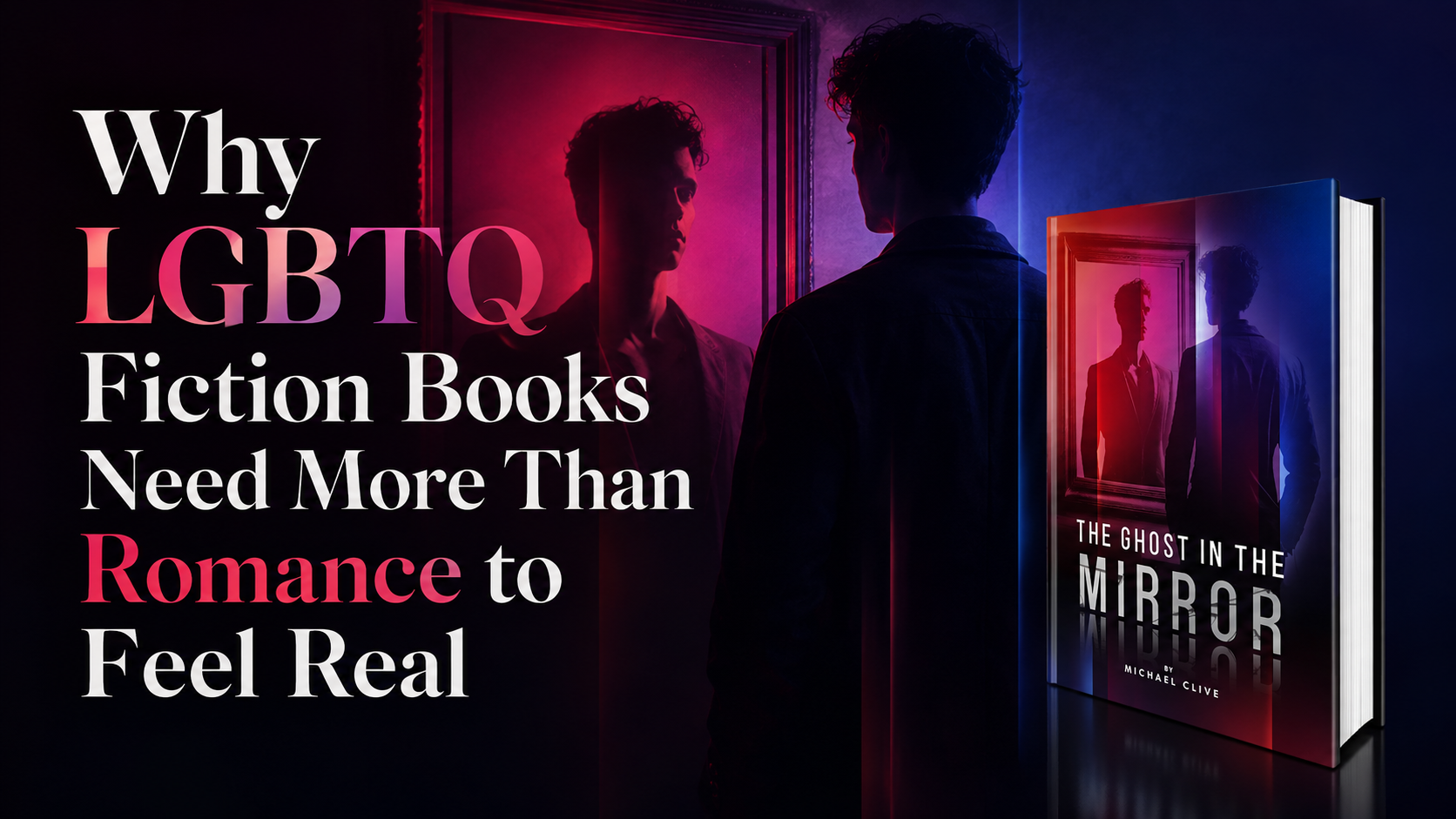
Romance becomes powerful when it reveals what a character has been hiding from himself. In memorable LGBTQ romance books, love is not only a destination. It is a mirror.
A romantic encounter can expose insecurity. It can reveal class anxiety, fear of aging, shame, ambition, grief, or the old wound of never being taken seriously. One character may think he wants passion, only to discover he wants respect. Another may think he wants control, only to realize he is afraid of needing anyone.
This is why emotional realism matters. Love should not magically erase a character’s contradictions. If anything, love should bring those contradictions closer to the surface. A guarded character becomes more guarded. A confident character suddenly feels clumsy. A lonely character does not instantly become whole because someone attractive pays attention.
That is where literary depth enters the romance. The relationship becomes a way to ask larger questions. Who gets to define me? Am I performing confidence or actually living it? Do I want to be admired, desired, protected, challenged, forgiven, or finally understood?
When gay romance novels ask questions like these, they become more than genre entertainment. They become character studies with emotional stakes.
Why Fiction LGBTQ Books Should Include Humor and Complexity
Humor is not decoration. In LGBTQ fiction books, humor can be survival, flirtation, deflection, intelligence, and armor. People often reveal themselves through jokes before they reveal themselves through confessions.
Witty dialogue can make a scene feel alive because real attraction is rarely smooth. People interrupt each other. They say the wrong thing. They overplay confidence. They try to sound casual and fail. They make sharp observations because sincerity feels too exposed. These moments keep romance human.
Complexity also means allowing characters to be flawed without turning them into lessons. LGBTQ characters should not have to be perfect representatives of a community. They can be vain, jealous, impatient, funny, wrong, brilliant, lonely, generous, and self-absorbed. That complexity is not a weakness. It is what makes fiction believable.
Readers do not want cardboard virtue. They want emotional truth. They want people who make mistakes and still deserve to be understood. They want romance that includes awkward timing, social pressure, mixed signals, and the strange comedy of trying to be cool while falling apart inside.
For U.S. readers especially, where LGBTQ stories now appear across literary fiction, commercial romance, television, film, and digital culture, predictability is the enemy. The stories that stand out are the ones that feel specific, not manufactured. They do not simply announce inclusion. They build a world where identity, desire, humor, and contradiction all exist at once.
Beyond the Love Story: Identity, Power, and Reinvention
The best lgbtq fiction books understand that romance does not happen in a vacuum. Love is shaped by power, money, ambition, beauty, age, class, family, career, geography, and personal history.
A character arriving in a new city may believe he is looking for work, fun, or escape. What he may actually be looking for is reinvention. A new place can expose an old loneliness. A glamorous room can reveal how bored everyone is. A flirtation can become the first honest conversation someone has had in months.
This is why LGBTQ romance books gain depth when they include the wider pressures of modern life. Fame changes how people are seen. Class changes who feels entitled to speak. Art changes what counts as beauty. Family history changes what a person believes he deserves. Money creates freedom, but not necessarily direction. Desire creates possibility, but not necessarily trust.
In strong gay romance novels, the love story becomes part of a larger transformation. The character is not only asking, “Will this person love me?” He is asking, “What life am I brave enough to choose?” That question gives the story lasting weight.
Romance may open the door, but identity walks through it. Reinvention is what happens after the first attraction, after the clever banter, after the moment when a character realizes he can no longer hide behind charm, anger, beauty, cynicism, or performance.
Conclusion
Memorable lgbtq romance books and gay romance novels stay with readers because they are not only about finding love. They are about finding the courage to be known.
The most effective LGBTQ fiction books give readers more than attraction. They give them loneliness, humor, ambition, fear, desire, contradiction, and the uneasy thrill of emotional honesty. They show that love is not separate from identity. It is one of the ways identity becomes impossible to avoid.
That is why fiction LGBTQ books need more than romance to feel real. Romance may bring two characters together, but the deeper story begins when they stop performing and risk being seen.